Description
Number of Pages: 108
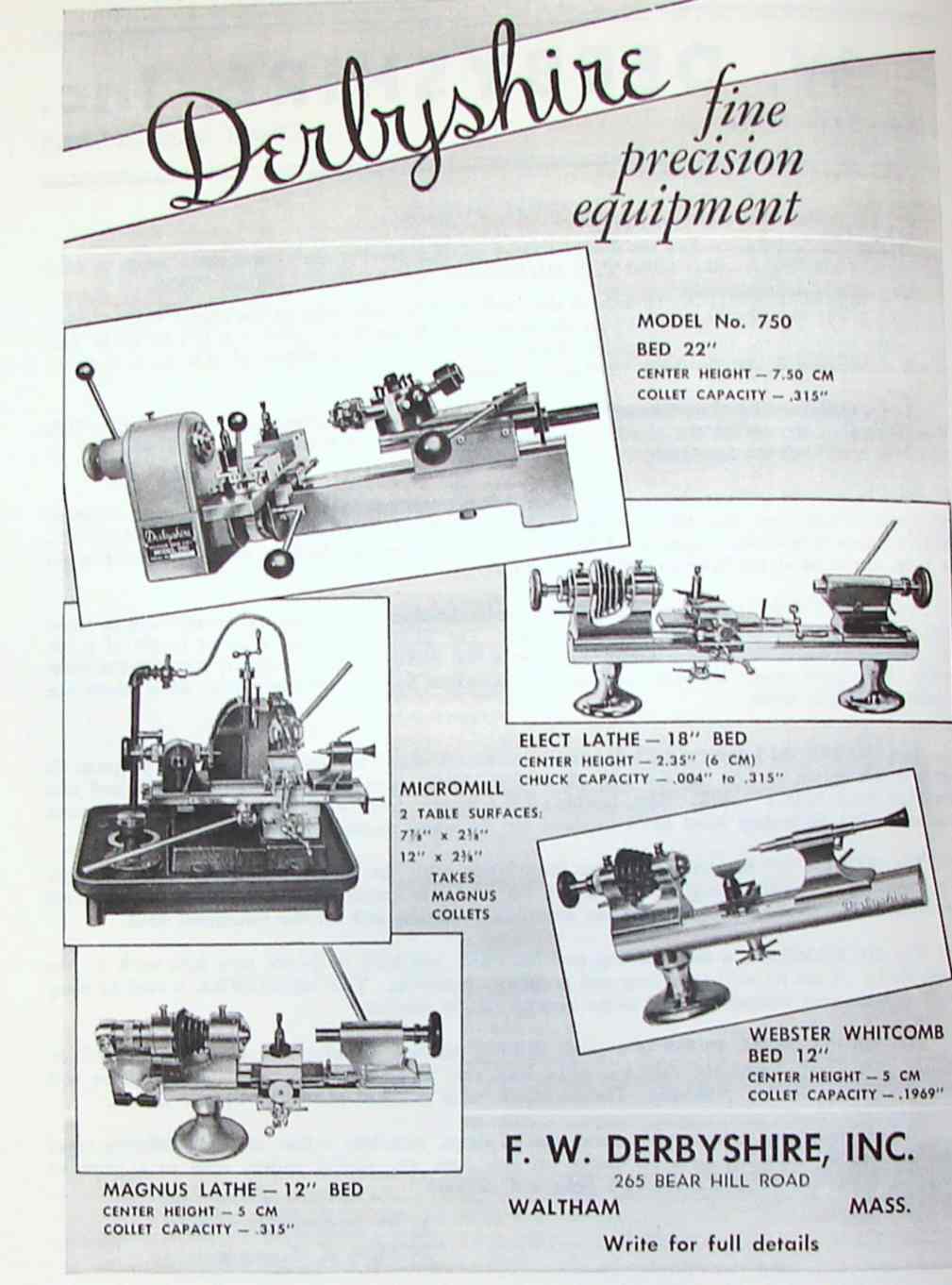
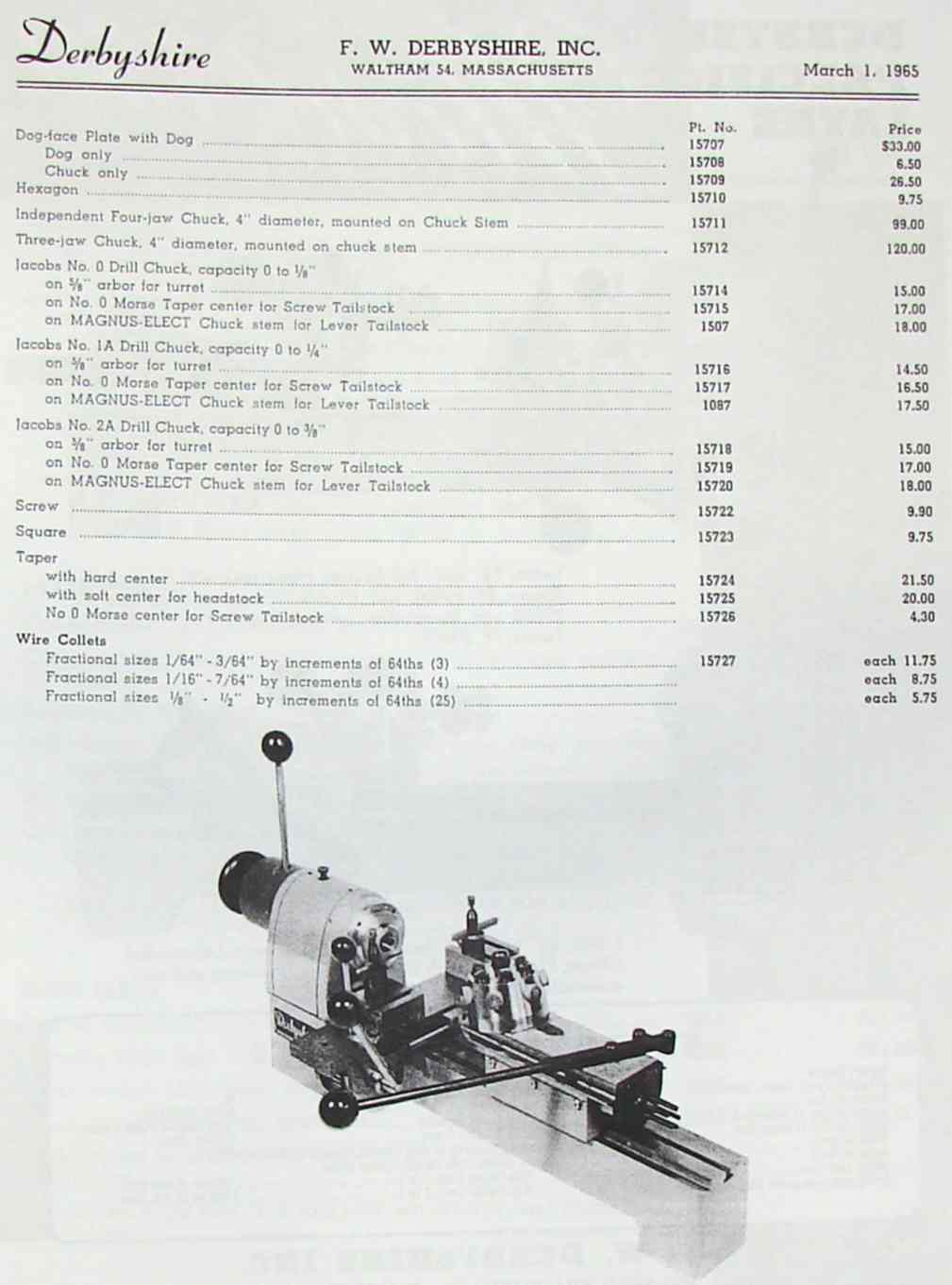
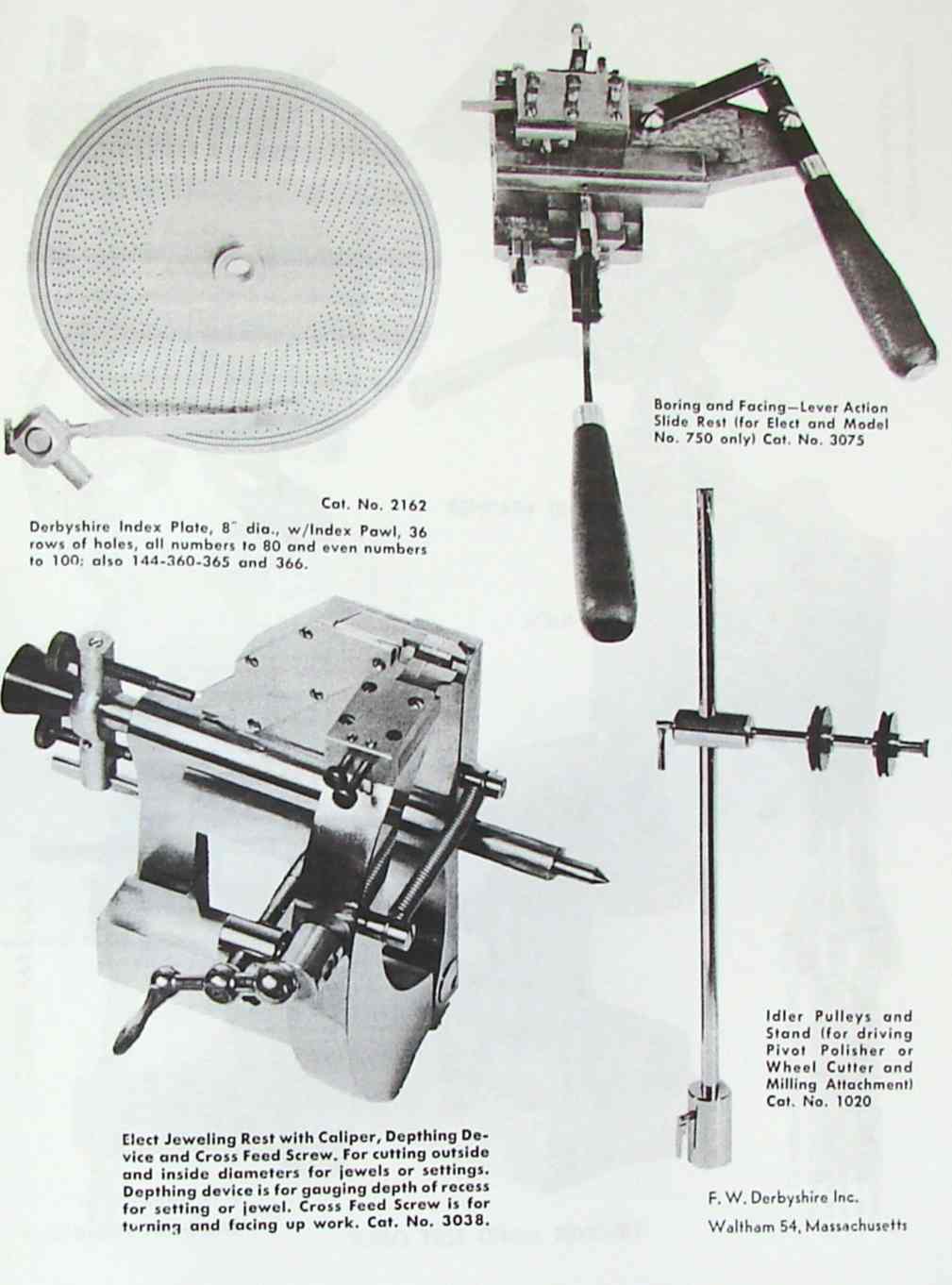
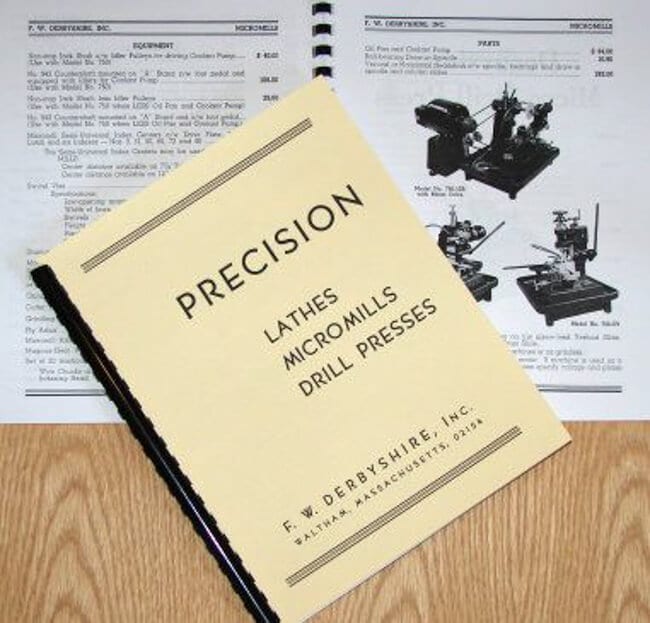
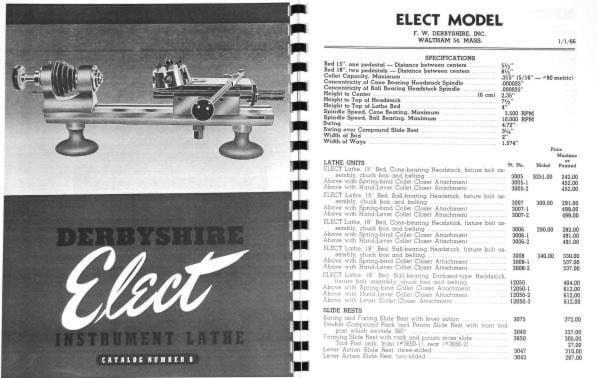
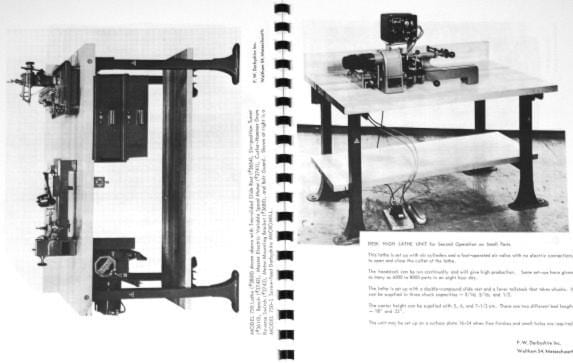
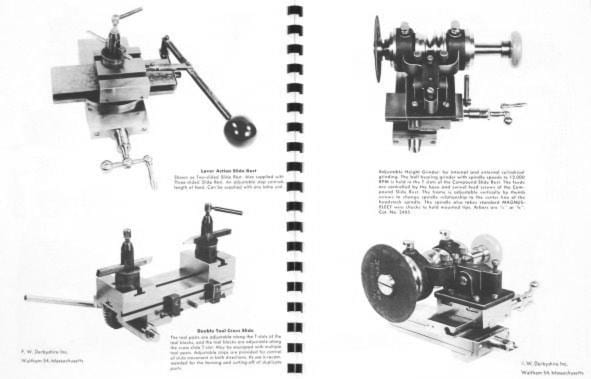
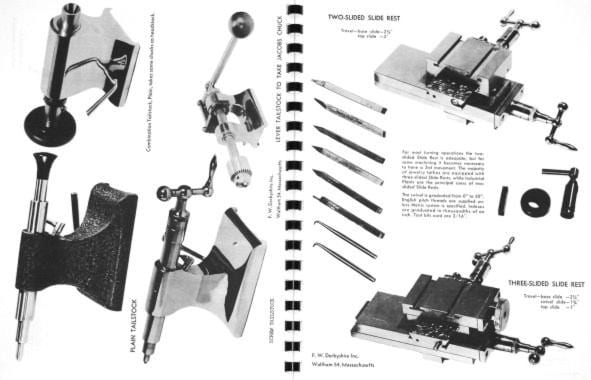
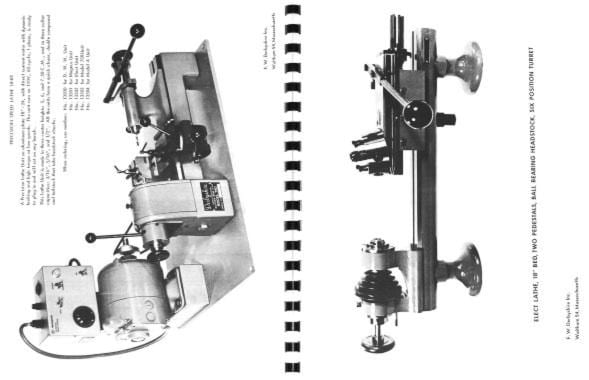
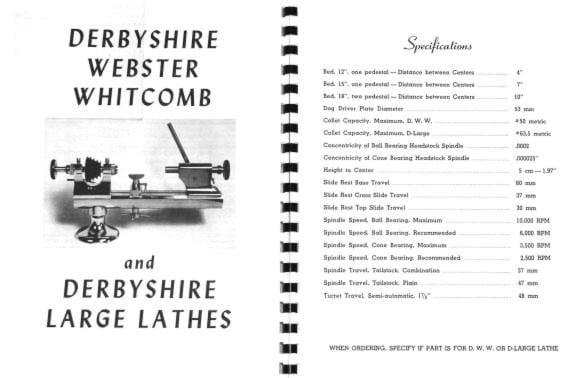
This is a reproduction, not a photocopy, of a Derbyshire Lathe, MicroMill, and Micro Drill Press Parts Catalog. This catalog contains information on almost everything they made through the 1960’s. It includes information about the specifications of each machine, descriptions of the parts for the machines with parts numbers, but it doesn’t include parts diagrams. There is a large section that shows pictures of machines set up with different accessories and attachments with model numbers of that configuration. There are pictures of every collet, chuck, and accessories to all the machines.
I believe all the machines have parts list, but it may be possible that some accessory, part, or machine may not have a descriptive parts list. It is difficult to tell due to the organization of the catalog.
Today the Company makes six different types of Watchmaker and Instrument Lathes, a small milling and grinding machine called THE MICROMILL, and a MICRO DRILL PRESS.
The WEBSTER-WHITCOMB lathe is the smallest lathe made today at this plant. It has a chuck capacity of #50 Metric or 3/16″ through the headstock. It can be supplied in a 12″, 15″ or 18″ bed, and is the standard for the watchmakers of the world. The center height of this lathe is 5 cm. which is standard height for most watchmakers’ lathes.
The DERBYSHIRE LARGE lathe has the same general construction as the WEBSTER- WHITCOMB lathe except the chuck is constructed differently so that the lathe will take 1/4″ or 63.5 Metric through the headstock.
The MAGNUS lathe is the next size lathe that is manufactured today and many of the Webster- Whitcomb attachments interchange with this lathe model. The MAGNUS lathe takes a MAGNUS- ELECT chuck which has a capacity of #80 Metric or 5/16″ through the headstock. The center height is 5 cm. the same as the Webster-Whitcomb lathe.
The ELECT lathe was manufactured for the clockmaker and not the watchmaker and is, therefore, of heavier construction than the other lathes. The ELECT lathe has a center height of 6 cm. and takes the MAGNUS-ELECT chuck as it has a #80 Metric or 5/16″ capacity through the head- stock. This lathe model has been used in the instrument field and in many other fields where fine precision work is done.
The MODEL 750 lathe was built for the instrument field and for light manufacturing purposes. It has a center height of 7.50 cm. and a 5/16″ or #80 Metric capacity through the headstock and uses the MAGNUS-ELECT chuck. This machine has a heavily constructed bed and many other features that make it a light-duty hand screw machine for the screw manufacturing companies.
The MODEL “A” has many parts that interchange with the Model 750 lathe. The headstock will take a 1/2″ piece through the head and has a 7.50 cm. center height. This lathe is used in the manufacture of small, light parts for the electronic industries and for the instrument field.
The MICROMILL is a small milling machine which was built to do the time fuse work for the large shells. It can be used in milling and grinding operations. This MICROMILL is used in many small experimental laboratories and shops throughout the country.The MICRO DRILL PRESS is a small drilling machine manufactured to do small precision drilling particularly where the drill has to be held very accurately in a collet. This machine will help solve many drilling problems. The headstock takes standard MAGNUS-ELECT Collets.
The company now manufactures many special items, including collets of many different types from an inch in length up to a 5C Collet. If you have any special collets, send in a print or sample and we will be glad to quote a price and delivery.
Pictures from Pages Inside
Overview
I have collected this information for many years and have found the information they contain to be priceless in using and setting up the machines properly. I believe this manual will be a valuable resource of knowledge that will provide a lot of helpful information that is often hard to find. My manuals are not photocopies. I maintain a high standard of quality in my reproductions. Most of the manuals I reproduce look better than their originals. I have professionally digitally edited every page, and removed stains, wrinkles and handwriting. All of the manuals are printed on thick white paper to withstand shop wear and tear; they are then comb bound with heavy cover pages so they lie flat on the workbench.